free calls here
six telstra payphones in the cbd, and the people who walk straight past them.
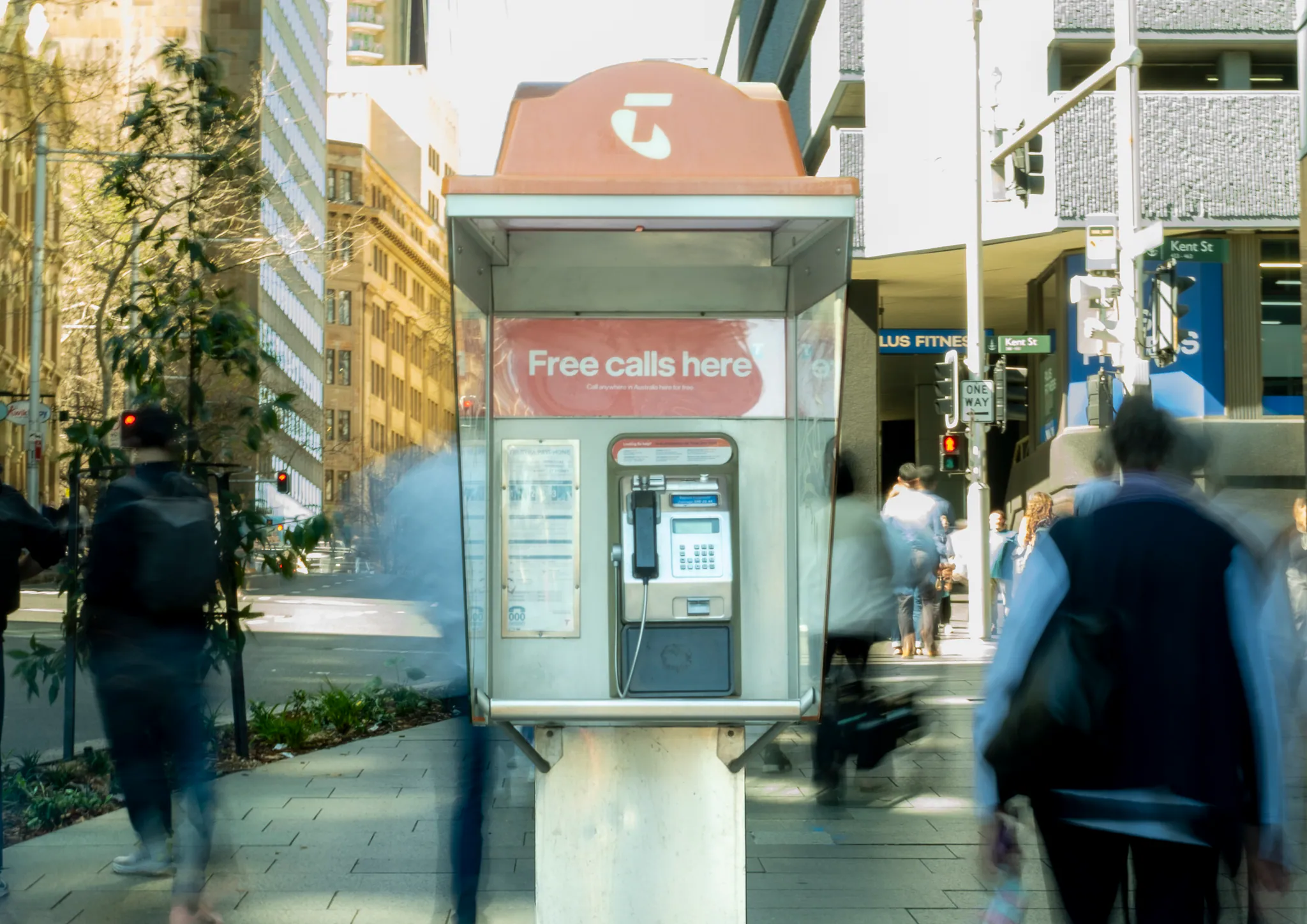
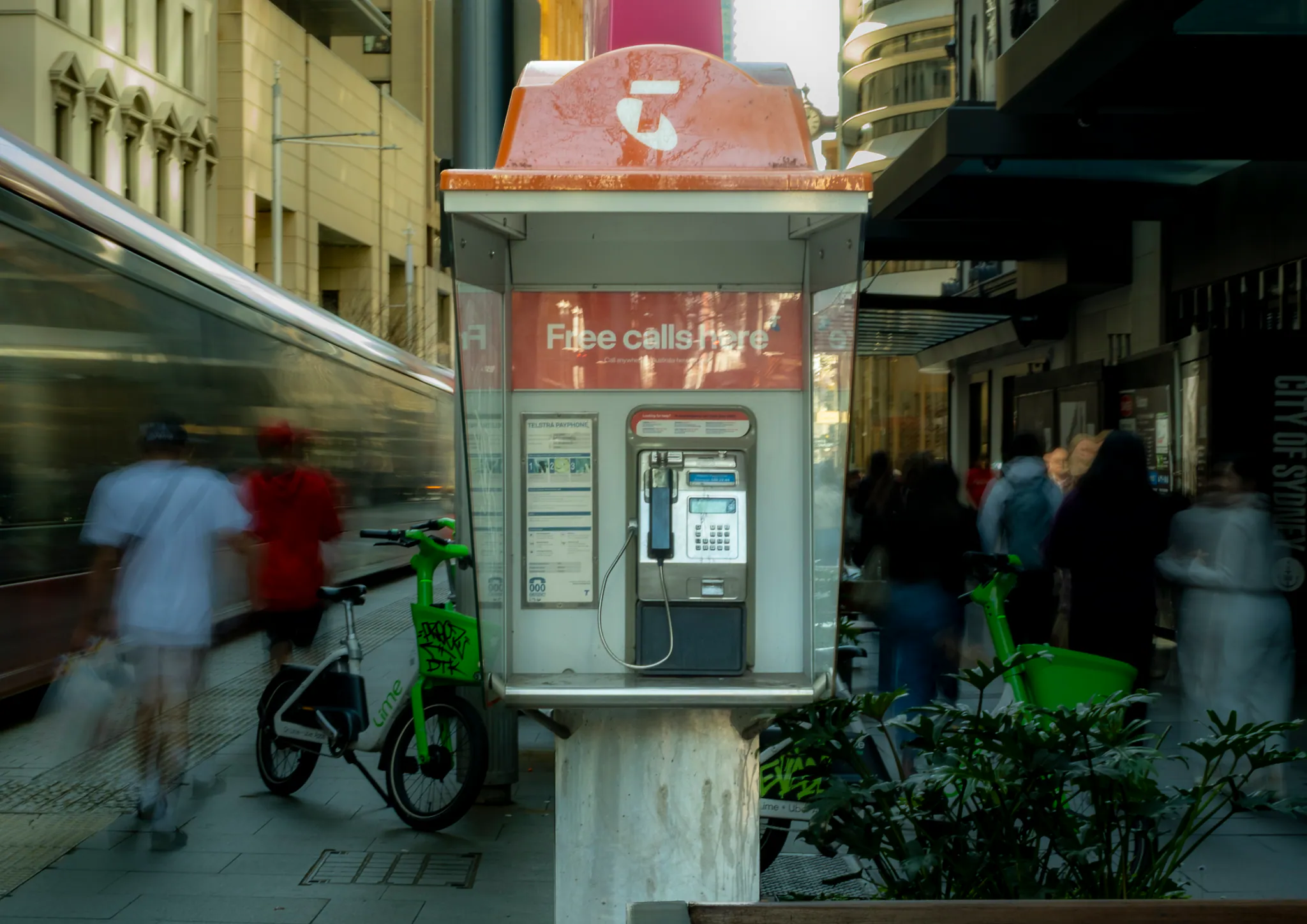
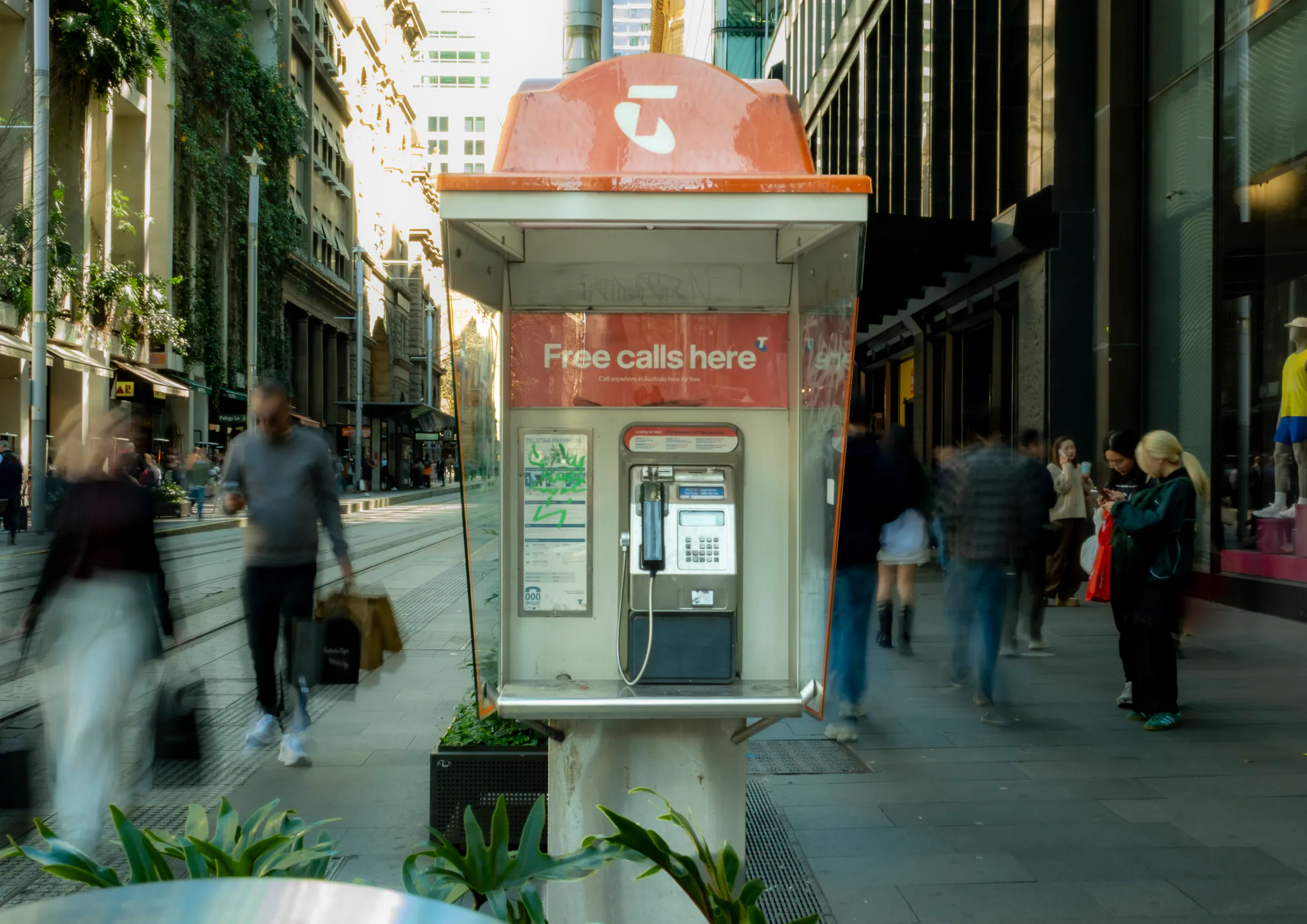
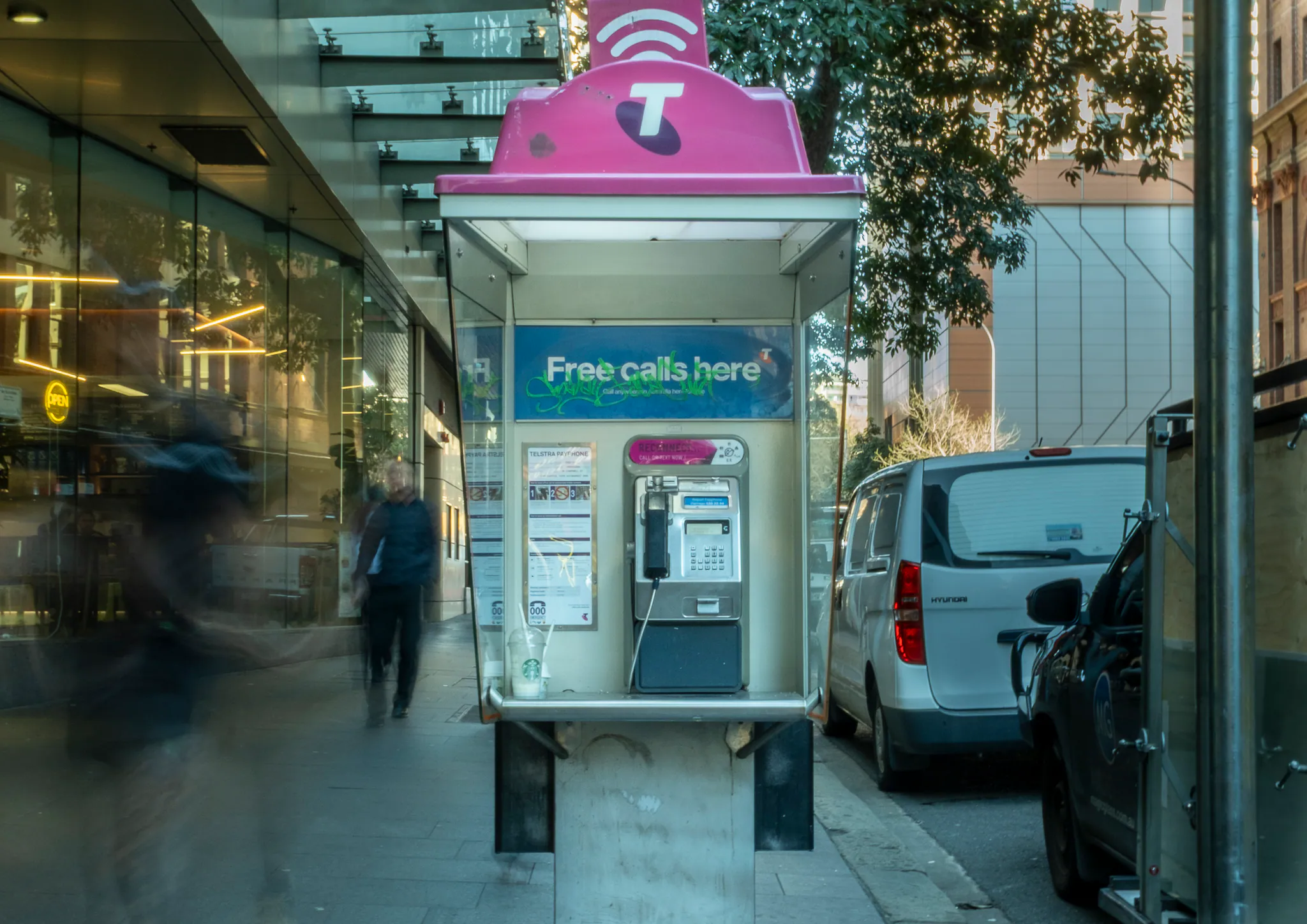
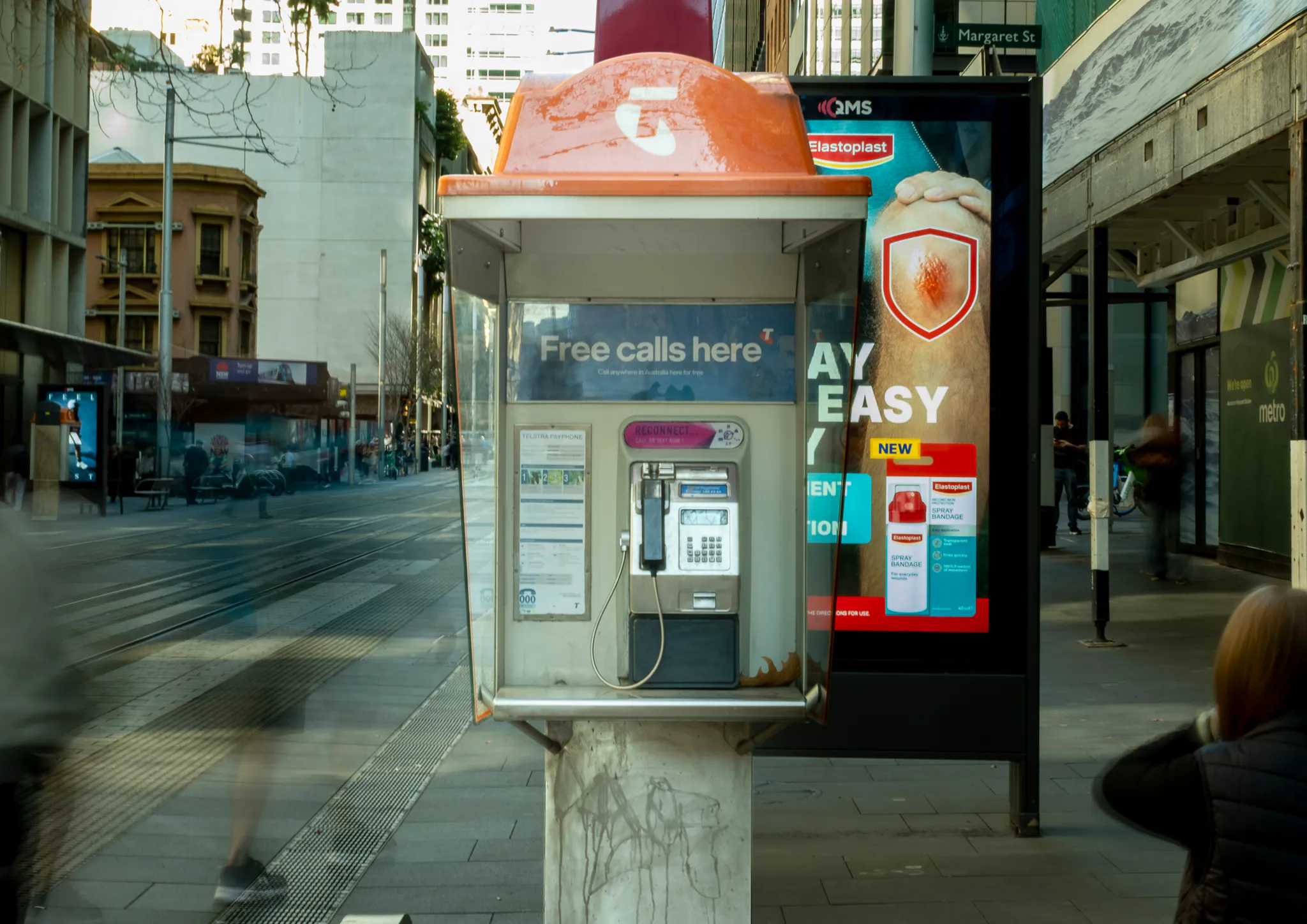
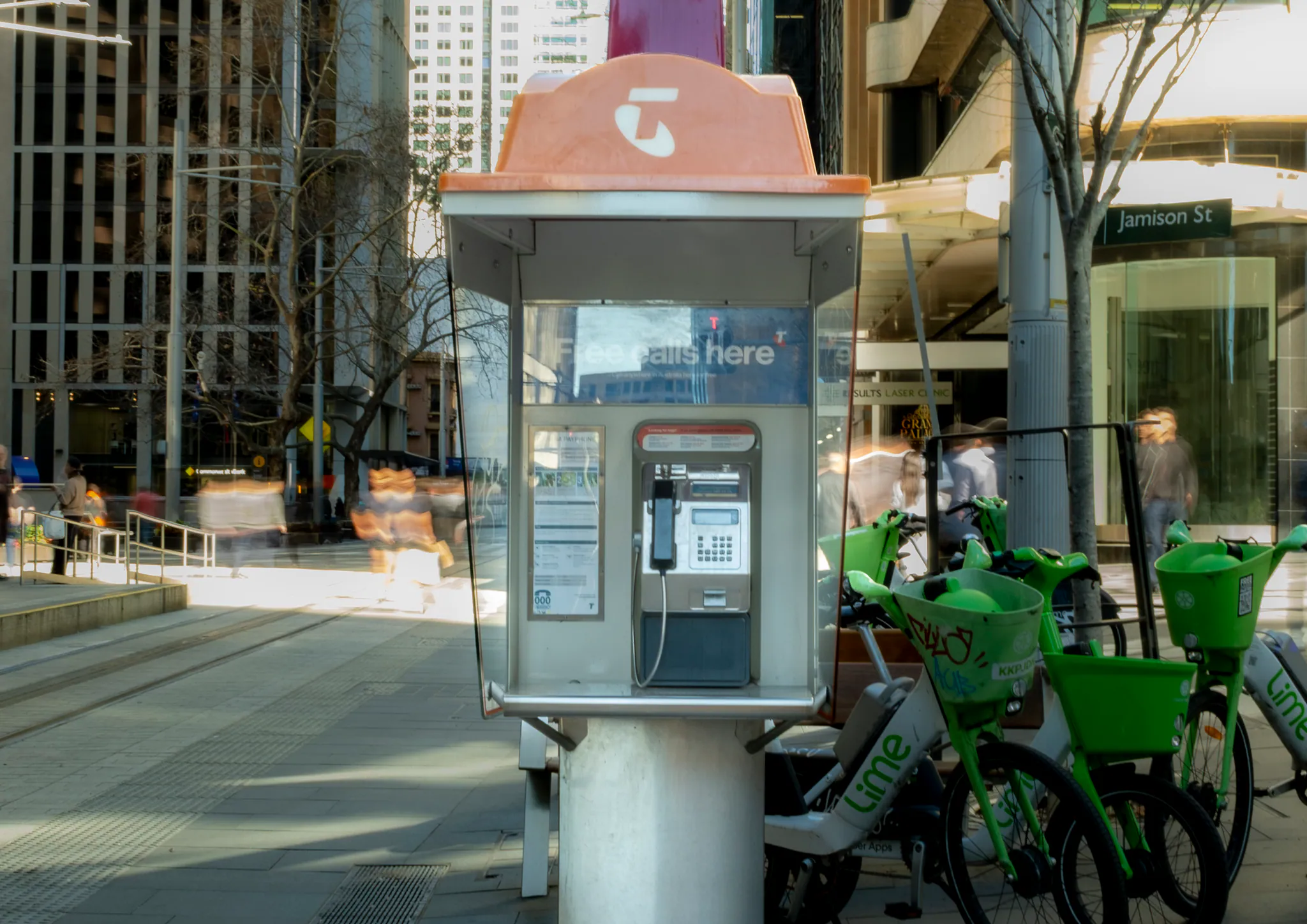
i started taking photographs of telstra payphones because i realised how often i walked past them without paying much attention to them. they remain as large fixtures in the cityscape with bright coloured hats, but they have become part of the background of daily life. in these photographs, pedestrians move around the booths without stopping or looking at them, even when the phone is directly in front of them.
i placed each payphone in the centre of the frame so it would be difficult for the viewer to ignore its presence. this reverses what happens on the street: the booth receives full attention in the photographs while the people give it none. a one second exposure keeps the phone relatively clear while the pedestrians, light rail and cyclists blur as they pass by it. the fixed booth becomes the visual anchor and the city moves around it.
payphones were designed as places where people had to stop, remember a number and stop to communicate. mobile phones have made that intentionality disappear, with portable and constant access to media and distractions, with calls and texting becoming a secondary function. the booth is still present and available but its purpose is no longer central to our daily lives. i was interested in the gap between the phone’s visibility and social attention rather than treating the payphone as something nostalgic.
the six photographs repeat the same basic structure while showing different booths and crowds. the harsh light and pale highlights reflect the visual intensity of the cbd. together, the images show how we don’t notice something obvious in our streets because we’re distracted by our portable phones.